Winter in Gaza: What International Law Requires Now
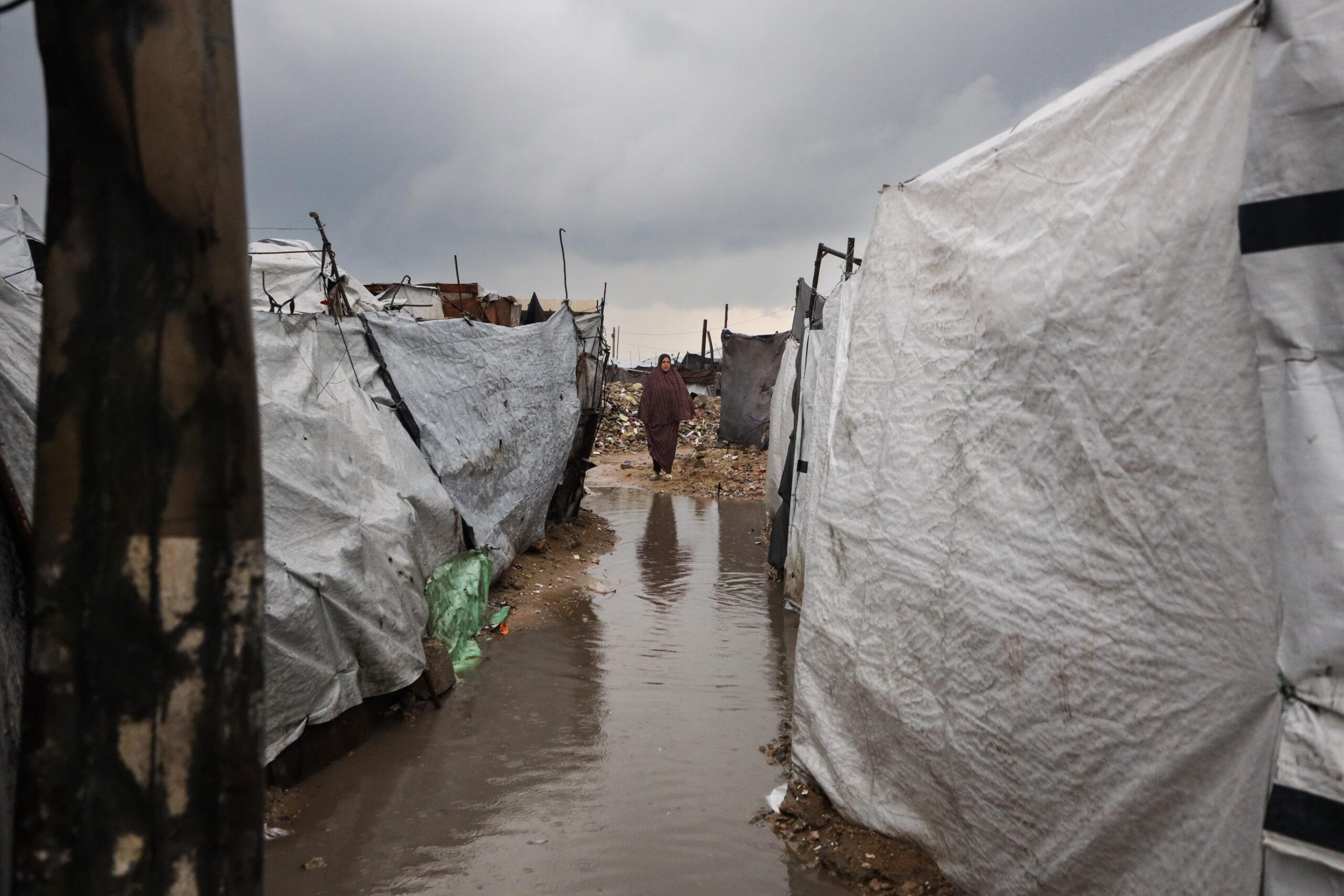
17 November 2026Winter rains and storms have deepened the humanitarian crisis in Gaza, where after three years of devastating hostilities, most of the population is still displaced, and around 1.4 million people live in sprawling camps of makeshift tents or in the ruins of destroyed buildings.
Many have been driven to coastal dunes and lowlands exposed to the elements as Israel unlawfully prevents civilians from accessing well over half of Gaza’s territory east of the ‘yellow line’ and continues demolishing homes in the area.
Rainwater and sewage have inundated tents and provisional shelters, with more than 46,000 households reportedly affected by flooding. In recent days, several people, including three children, died when a sand dune collapsed onto their tents, and another child was reported to have drowned. According to the UN, 6,000 shelters have been destroyed, thousands more damaged, and 3,900 households are left entirely without shelter (recent estimates place these numbers even higher). Basic winter supplies are lacking. Many have lost their belongings and livelihoods, or have been displaced yet again. Damage to medical centres, learning spaces, and other public facilities has disrupted essential services.
Doctors have raised concerns about overcrowded conditions that contribute to the spread of infectious diseases such as meningitis. These risks are particularly acute for infants, young children, older persons, and individuals with underlying medical conditions or compromised immune systems. Flooding can also expose, bury, or shift unexploded ordnance into new areas, endangering civilians, especially children.
The catastrophic impact of the flooding was not inevitable. Much of it could have been mitigated if Israel had respected international law. On 17 November 2025, after the entry into force of the tenuous ceasefire, the United Nations Security Council adopted Resolution 2803, which endorsed a series of transitional arrangements stipulated in the US-proposed 20-point plan. The IHL Centre’s legal brief on Legal and Humanitarian Imperatives for the ‘Day After’ in Gaza set out key humanitarian issues that all actors involved in implementing plans for Gaza’s future should address as a matter of priority. One year on, living conditions in Gaza remain abysmal. The lack of adequate preparations for the onset of winter illustrates Israel’s continued failure to comply with its obligations under international law.
As elaborated in the legal brief, as the occupying power, Israel bears primary responsibility to ensure that the basic needs of Gaza’s civilian population are met, including food, water, shelter, sanitation, hygiene, and medical care. These obligations must be interpreted and implemented in a manner that reflects the diversity of the civilian population in Gaza and their needs. Failing this, Israel must consent to and facilitate relief operations, managed by impartial humanitarian organisations, with all the means at its disposal. Accordingly, it must remove all unlawful access and logistical restrictions on humanitarian aid and commercial supplies, and allow the entry of urgently needed items such as ‘durable shelter, warm clothes, blankets, bedding and safe heating solutions’ as well as ‘generators, fuel, engine oil, spare parts, equipment to pump out water, remove debris and clear explosive ordnance’. Some of these items are reportedly waiting just across the border in Egypt, ready for dispatch. Supplies of adequate quality and quantity must reach the entire population of Gaza, including displaced persons, without discrimination.
Israel must also take steps, in cooperation with the local authorities, to ensure the restoration and uninterrupted functioning of medical facilities as well as water and sanitation systems, and to prevent the spread of infectious diseases. This includes access to maternal and neonatal care, sexual and reproductive healthcare, rehabilitation services and assistive devices, as well as mental health and psychosocial support. Unexploded ordnance must be marked and removed. In addition, children’s access to safe and inclusive learning spaces must be restored, including for children with disabilities.
Importantly, Israel must cease and prevent further forcible displacement. Civilians in Gaza must be permitted to move away from high-risk coastal areas and lowlands and otherwise granted free movement across the territory, subject only to the narrow limitations provided for by international law. The blanket cordoning off of most of Gaza’s territory under Israeli control beyond the ‘yellow line’ does not meet these requirements and has forced Gaza residents to seek shelter in unsafe areas. Conditions must be put in place to enable the safe, dignified, and voluntary return of displaced persons to their homes. Israel must halt unlawful destructions of property, and residential structures must be rebuilt.
The beginning of another winter season has inflicted additional hardship on Gaza’s population – hardship that was foreseeable and could have largely been mitigated. After three years of devastating hostilities, and one year into the fragile ceasefire, legal obligations must translate into meaningful action to alleviate the suffering of all civilians.
Photo Credits: Heavy rain floods tents and streets, Gaza City, 07.11.26. Yousef Zaanoun/ActiveStills Photo Collective. All Rights Reserved.